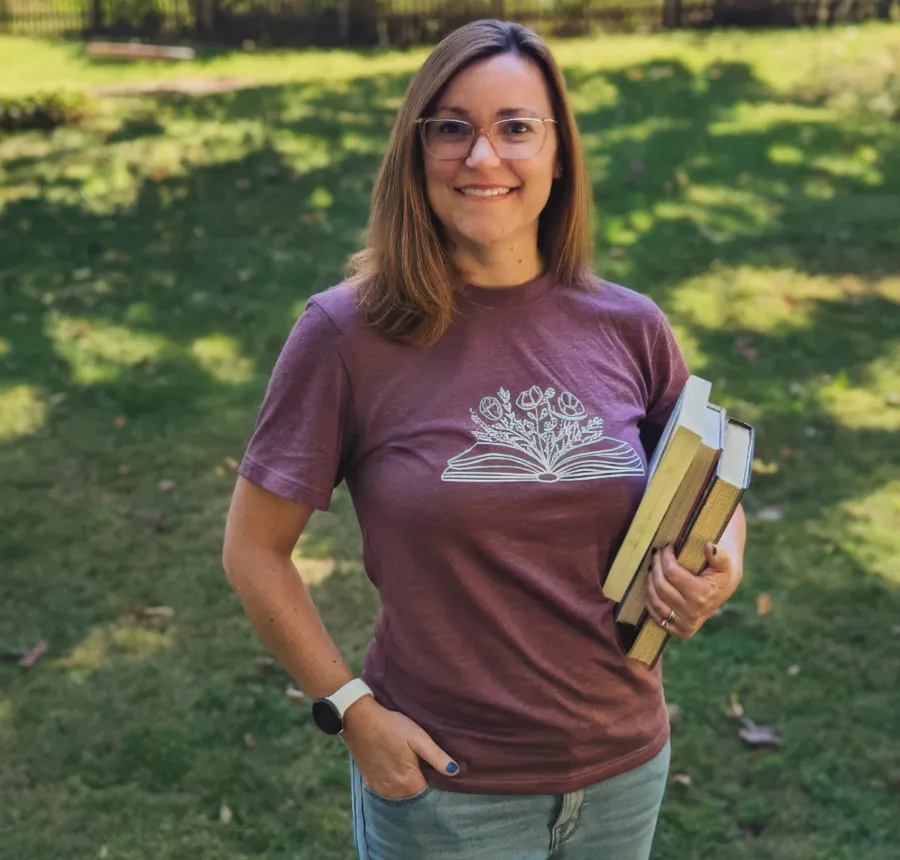
Back in May 2020, I had the loveliest conversation with Ashley, Jen, and Sara on the Unabridged Podcast — one of my favorite book podcasts, full stop. We talked about something I care deeply about: the power of building a reading community online, and what happens when books become a bridge between people who might never have found each other otherwise.
What we talked about
I found bookstagram in 2018, about six months after my second child was born, when I was looking for a way to connect with other readers beyond my immediate circle. What I didn’t expect was how much it would change the way I read — not just what I read, but how I engage with books.
We got into a lot of ground in this episode:
On building @readwithtoni: How a space that started as a place to share what I was reading became a community of readers who challenge and expand each other. Online book communities are different from local book clubs in one important way — the range of voices. When you open a conversation about a book on Instagram, you hear from people with entirely different life experiences, reading histories, and cultural contexts. That changes the conversation.
On buddy reads: By the time we recorded this, I’d organized nearly 20 buddy reads — reading a book together with the community, section by section, with discussion along the way. My process: look for books that span different cultures, time periods, and genres; let the community vote; prepare discussion notes on Sundays; go chapter by chapter so no one gets left behind. The goal was always a conversation, not a quiz.
On the books that started it all: Homegoing by Yaa Gyasi was a turning point for me — the book I’d point to when someone asks why bookstagram matters. The conversations that emerged from that read were unlike anything I’d experienced in a traditional book club setting. Also came up: Pachinko, A Place for Us, The Heart’s Invisible Furies, and All the Ugly and Wonderful Things.
A note on where things went from here
This episode was recorded early in the pandemic, when online community felt more essential than ever. The years since have only deepened my conviction that reading together — even asynchronously, even across hundreds of miles — is one of the most meaningful things we can do with books.
The @readwithtoni community has grown to nearly 4,000 readers since then. Read With Toni, the buddy read, is still going — seven-plus years and counting. And Read to Learn, the nonfiction group I started in 2020, grew directly out of that same impulse: to read the harder, more important books alongside other people.
Thank you to Ashley, Jen, and Sara for having me. It’s a conversation I still think about.
Full transcript
Episode 126 — “Plugging into Bookish Communities Online with @readwithtoni”
Bookish check-in
Jen (00:02): Hello and welcome to the Unabridged Podcast. I’m Jen.
Ashley (00:05): I’m Ashley.
Sara (00:06): And I’m Sara.
Jen (00:07): And we are so excited for today’s episode. We have a guest today, Toni, and we are going to be talking about something that I think all of us care very deeply about, which is building bookish community online. So today we’re going to be talking to Toni about her amazing Instagram account, @readwithtoni, and just all things about building bookish community online. So Toni, welcome to the Unabridged Podcast.
Toni (00:30): Thank you so much. I’m so excited to be here. I’m such a fan of this podcast and you guys specifically.
Jen (00:37): Oh, we’re fans of you.
Ashley (00:38): Yes.
Sara (00:39): So much. So before we get into our main topic, we always like to do a little bookish check-in where we talk about what we’ve been reading lately. So Toni, do you want to go first or do you want us to start?
Toni (00:50): You guys go first.
Sara (00:51): Okay. I will go. So I just finished Anxious People by Fredrik Backman, and it was so good. I don’t know if you all have read it yet, but it was just really funny and heartwarming and I just really enjoyed it. I was a little bit worried because I hadn’t really read Backman before, and I know a lot of people love him and then sometimes there can be hype and you know how it is. But I thought it was fantastic.
Jen (01:18): Ooh, I love Backman. I think A Man Called Ove is still my favorite but Anxious People is really good.
Sara (01:24): Yeah, I think I might need to read more of his stuff now.
Ashley (01:27): I just started The Vanishing Half by Brit Bennett — I’m only like 30 pages in but so far so good. I think this is going to be really popular this summer.
Jen (01:35): Oh, that’s one I’ve had my eye on. And I just finished Hamnet by Maggie O’Farrell, which was absolutely stunning. I highly recommend it to everyone. It’s just one of those books that I think about for a long time after finishing.
Toni (01:50): I loved Hamnet so much. That’s one of my favorite books of the year so far.
Jen (01:54): Yes! Okay Toni, what have you been reading?
Toni (01:57): So I just finished All the Ugly and Wonderful Things by Bryn Greenwood, which was our most recent community read. And it was such a complicated, difficult, but ultimately very moving book. It sparked so much conversation in the community, which is always the hallmark of a really great buddy read pick for me — when people have strong feelings in different directions and it leads to a real discussion. And then I just started The Pull of the Stars by Emma Donoghue, which is set during the 1918 flu pandemic and feels very timely right now.
Ashley (02:32): Oh wow, yes.
Toni (02:33): It’s a little surreal to read during a pandemic but also kind of cathartic, I think.
Jen (02:38): I can see that. There’s something about reading about people who went through hard things and came out the other side.
Toni (02:44): Exactly.
Main discussion — bookish communities
Jen (02:47): Okay, so let’s get into it. Toni, tell us about @readwithtoni. How did it start, and how did it become what it is now?
Toni (02:55): So I started my Instagram account in early 2018, which was actually about six months after my second child was born. And I think like a lot of people, I came to bookstagram looking for community. I had always been a reader but reading had become really solitary for me, and I missed talking about books with people. And Instagram seemed like this amazing place where you could just find your people, wherever they were in the world.
Ashley (03:22): That’s so relatable. I think that’s why a lot of us ended up on bookstagram.
Toni (03:26): Right, and at first I was just posting about what I was reading, doing the flat lays, you know, the whole thing. But I kept noticing that the content I was most excited about was when people were having conversations — not just saying “I loved this book” but actually engaging with the ideas in it. And I thought, how do I make more of that happen?
Jen (03:47): And that’s where the buddy reads came in?
Toni (03:49): That’s exactly where the buddy reads came in. I did my first one in — I want to say late 2018. And the idea was really simple: let’s all read the same book at the same time and talk about it together as we go. But what I found was that the conversation that emerged from that was so much richer than anything I’d experienced in a traditional book club, and I think it’s because of the diversity of voices.
Sara (04:12): Can you talk about that a little more? What do you mean by diversity of voices in that context?
Toni (04:17): Yeah, so when you’re in a local book club, you tend to have people who are from the same community, maybe the same socioeconomic background, similar life experiences. And that’s fine, those can be wonderful conversations. But when you open a book discussion on Instagram, you’re suddenly hearing from people who have entirely different relationships to the material. Someone who grew up in the culture a book is set in is going to have a completely different read than someone who is encountering that culture for the first time through the book. And both of those perspectives make the conversation better.
Ashley (04:52): That’s such a good point. I feel like that’s one of the things that’s really unique about bookstagram community — that reach.
Toni (04:59): And it’s changed the way I read. Not just what I read but how I engage with books. I’m always thinking now, as I’m reading, “what questions is this going to raise? What are people going to want to talk about?” It makes me a more active reader.
Jen (05:13): So how do you structure the buddy reads? Walk us through your process.
Toni (05:18): So I’ve done close to 20 of them now, and I’ve kind of landed on a structure that works well. The first thing I do is think about what kind of book would make for a good community read. I’m looking for books that have something to say — that have ideas in them that people are going to want to dig into. I try to vary the genres and time periods and cultures, so we’re not always reading the same type of thing. And then I let the community vote, which they love.
Ashley (05:46): Oh, that’s fun.
Toni (05:47): And then once we’ve picked the book, I create a reading schedule. Usually it’s chapter by chapter or section by section, spread over a few weeks. And I post discussion prompts and questions as we go. I do a lot of my prep on Sundays — I’ll read the section and then draft the discussion questions, trying to think about what’s going to get people talking.
Sara (06:09): Do you find it hard to keep spoilers from coming up when people are at different points in the book?
Toni (06:14): That’s always the challenge. I try to be really clear about the schedule and I ask people to keep comments to the section we’re discussing. But the truth is, some people race ahead and some people fall behind, and I’ve made peace with that. The important thing is that there’s always a conversation happening, and people can jump in where they are.
Jen (06:33): I love that. And what would you say is the book that has generated the most conversation, or that was the most meaningful community read?
Toni (06:41): Oh, without a doubt, Homegoing by Yaa Gyasi. That was — I think that was my second or third buddy read, and it was a turning point for me in understanding what this project could be. The conversations that came out of that read were unlike anything I’d experienced. People who had personal connections to the history were sharing things that just completely reframed the book for others. It was one of those moments where I thought, this is why we do this.
Ashley (07:09): Homegoing is such a good pick for that. It has so many entry points for conversation.
Toni (07:14): It really does. And it’s a book that I think a lot of people had heard of but hadn’t gotten to yet, and doing it as a community read gave people the push to finally pick it up. That’s another thing I love about buddy reads — the accountability. There are books people want to read but find intimidating, and doing it together lowers the barrier.
Sara (07:34): What are some other reads that stand out to you?
Toni (07:37): Pachinko was another one — that was a huge conversation. A Place for Us by Fatima Farheen Mirza. The Heart’s Invisible Furies by John Boyne, which people had really strong and divided opinions about, which made for a great discussion. And most recently, All the Ugly and Wonderful Things, which as I said, was complicated — but that’s often where the best conversations live, in the complicated books.
Jen (08:04): I think you’re absolutely right about that. Sometimes the books that make you most uncomfortable or that you have the most complicated feelings about are the ones that stick with you.
Toni (08:12): Exactly. And I think there’s something really valuable about sitting with discomfort together. It’s easier to do that in community than alone.
Ashley (08:20): Can you talk about how the pandemic has affected your community and the buddy reads? Because you’ve been running these for a while now and this is a very different moment.
Toni (08:30): Yeah, it’s interesting. I think the pandemic has made people crave connection more than ever, and that has definitely shown up in the community. Engagement is up, participation in the buddy reads is up. I think people are turning to books partly as an escape but also as a way to process what’s happening — to find context and meaning. And doing that together feels really important right now.
Sara (08:54): That makes so much sense.
Toni (08:55): I’ve also been thinking a lot about what we’re reading. I started a separate project called Read to Learn specifically for nonfiction, because I felt like there was a real hunger in the community to read more deeply about history, about social justice, about the things that are happening in the world. And the response has been really wonderful.
Jen (09:16): Oh, I didn’t know about that. Tell me more.
Toni (09:19): It’s a newer thing. The idea is similar to the buddy reads but focused specifically on nonfiction that helps us understand the world better. We just finished The Color of Law by Richard Rothstein, which was intense but so important. And I’m planning to do Stamped from the Beginning later this year.
Ashley (09:38): Those are such important books.
Toni (09:40): They are. And I think nonfiction benefits even more from the community read format than fiction does, because you need people to help you process the information. It can be heavy, and having a community to work through it with makes a real difference.
Jen (09:54): That’s beautiful. I love that you’ve created this space that does that work.
Toni (09:59): Thank you. It’s become really central to my reading life and I think to a lot of other people’s reading lives too, which is amazing to witness.
Sara (10:07): So for people who want to build community online — whether it’s a book community or something else — what advice would you give them?
Toni (10:15): I think the first thing is to be genuine. People can tell when something is performative versus when you’re actually showing up as yourself and sharing what you care about. The accounts that I’ve seen build real community are the ones where the person behind the account has a real point of view and is willing to share it.
Ashley (10:34): That’s such good advice.
Toni (10:35): And I think the second thing is to be consistent. Not necessarily posting every day, but being present in a way that people can count on. When the community knows you’re going to be there, they show up too.
Jen (10:48): And I would add — from watching you — that you really engage with your community. You’re not just posting and disappearing. You’re actually in the comments, having conversations.
Toni (10:57): That’s the part I love most, honestly. The conversations in the comments are where the magic happens. The post is just the starting point.
Sara (11:04): I think that’s what makes @readwithtoni feel different. It feels like a community rather than just a following.
Toni (11:11): That’s the goal. That’s always been the goal.
Give me one . . . Bookstagram made me do it
Jen (11:17): Okay, we always end our episodes with a segment called “Give Me One” where we each share one recommendation. And today’s theme, in honor of Toni, is “Bookstagram Made Me Do It” — a book you read because of bookstagram. Toni, do you want to start?
Toni (11:32): Oh, I love this. Okay. I’m going to say A Little Life by Hanya Yanagihara. I had heard about it for years but I was intimidated by it — the length, the reputation for being devastating. And I finally picked it up because I kept seeing people in the bookstagram community talking about it in a way that made me feel like I needed to read it to understand what they were talking about. And it completely wrecked me in the best possible way. It’s one of the most powerful books I’ve ever read.
Ashley (12:04): Oh, that’s such a good answer. Mine is Pachinko by Min Jin Lee. I just — it had been on my radar but it was bookstagram that really made me feel the urgency to read it. And it’s now one of my all-time favorites.
Sara (12:18): Mine is Normal People by Sally Rooney. I know, I know — everyone read it. But it was genuinely bookstagram that made me pick it up, because I kept seeing it everywhere and finally gave in, and then I completely understood why.
Jen (12:31): And mine is The Priory of the Orange Tree by Samantha Shannon. It’s an epic fantasy and that is not always my genre, but I kept seeing people I trusted raving about it and I thought, okay, fine. And I loved it. So bookstagram did that.
Toni (12:47): I love that. That’s such a good one.
Jen (12:49): Toni, thank you so much for being here today. This has been such a wonderful conversation.
Toni (12:54): Thank you for having me. I had so much fun.
Ashley (12:57): We need to have you back.
Sara (12:58): Absolutely.
Toni (12:59): I would love that anytime.
Jen (13:01): And for everyone listening, you can find Toni on Instagram at @readwithtoni — go follow her right now, you will not regret it. Thank you all for listening to the Unabridged Podcast. Until next time.
Listen to the full episode on Spotify or visit the Unabridged Podcast episode page.
Note: This transcript has been lightly edited for readability. Timestamps are approximate.